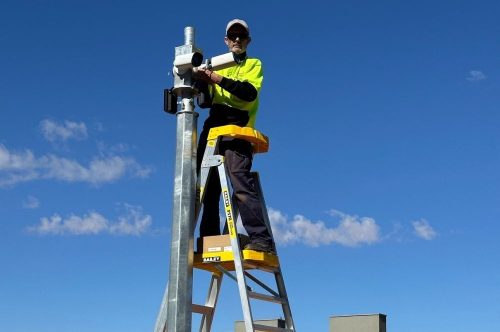
If you’re installing or maintaining lighting, communications, or power poles across Western Australia, you’re already aware that working at heights is part of the job. Many of these jobs put workers more than two metres above ground level. That’s the threshold where Work Health and Safety Regulations classify the task as high-risk construction work, and it’s where most serious injuries happen.
This article explores the five most common hazards for working at height during pole installation and maintenance. We’ll look at practical examples you’ll recognise from your own sites, then outline control measures that protect workers and keep your projects compliant with Australian WH&S Standards.
Inadequate Edge Protection and Fall Risk
One of the biggest hazards when working at heights is the absence of proper edge protection. Picture a technician climbing a fixed street-lighting pole fitted with rung steps but no safety climb rail. A slip, a moment of fatigue, or a tool snagged on clothing can send that person to the ground.
Inadequate edge protection isn’t limited to climbing. Crews erecting poles in substations often work from temporary scaffold platforms. If those platforms lack guardrails or toeboards, the risk of falling increases, especially when workers are manoeuvring heavy headframes or outreach arms.
How Can You Reduce the Risk?
Mid-hinged poles that eliminate climbing altogether are an ideal solution. When you can lower the entire top section to a safe working height, you remove the fall hazard and cut the time spent in exclusion zones. For pole erection work, use scaffold towers with compliant guard rails and ensure the working surface can safely support the weight of workers and materials.
Falling Objects Striking Workers Below
Tools, fixings, and building materials become serious hazards the moment they’re more than two metres above ground level. During pole maintenance, a spanner dropped can strike a ground crew member with enough force to cause severe injuries. Even small items gain dangerous momentum over that distance.
Falling objects are a constant threat on any site where work is happening at height. Bolts, cable ties, and hand tools can all slip from gloved hands, especially in wet weather or when workers are focused on a tricky connection.
How Can You Reduce the Risk?
Fit tool lanyards to every item carried above ground level. Lanyards tether tools to the worker or the structure, so a dropped item stays within arm’s reach instead of accelerating toward someone’s head.
Establish exclusion zones using barricade tape and warning signs. No one should be standing directly below elevated work unless they’re wearing appropriate protective equipment and the task absolutely requires it. Attach toe boards to mobile platforms and scaffold edges to catch small objects before they fall. Schedule crane lifts and pole erections during quieter periods when fewer people are on site, and brief all workers on the location of high-risk tasks before the shift starts.
Fragile or Unstable Working Surfaces
Elevated work platforms are essential for reaching the top of fixed poles, but they’re only as safe as the ground beneath them. Imagine positioning a cherry picker on a sloping grass verge next to a new street-lighting column. The soil is soft from overnight rain, and as the basket extends, the machine begins to tilt. That’s an unstable working surface, and it puts the operator at serious risk.
Fragile surfaces are another concern. Temporary covers over trenches, old roof sheeting on adjacent structures, or compacted fill that hasn’t settled can all give way under the weight of plant or personnel. Once the surface fails, workers can fall through, or the entire platform can tip.
How Can You Reduce the Risk?
Conduct a ground assessment before you position any elevated platform. Check for soft spots, underground voids and recent excavation. Use spreader plates under outriggers to distribute the load, and avoid working on slopes steeper than the manufacturer’s specification.
If the site conditions are marginal, consider a different approach. Pole designs that lower to ground level remove the need for elevated platforms on difficult terrain. Always re-check footing stability after heavy rain or if the platform has been moved, and never assume yesterday’s setup is still safe today.
Electrical Hazards from Overhead or Underground Services
Installing power connection poles or upgrading street lighting often means working near live electrical infrastructure. Overhead lines, underground cables and adjacent distribution equipment all pose a risk of shock, arc flash, or electrocution. The hazard intensifies when you’re guiding a steel pole into position with a crane because the pole itself becomes a conductor if it contacts a live line.
Electrical hazards aren’t always visible. Underground services can be mismarked or undocumented, and overhead clearances can be misjudged when you’re focused on aligning a baseplate with ragbolts.
How Can You Reduce the Risk?
Maintain minimum approach distances to all live conductors. If the work requires you to be closer, isolate the circuit, and get a clearance certificate before you start. Use spotters to watch clearances during crane lifts, and fit non-conductive taglines to guide poles without putting hands near the load.
Before you excavate for footings, verify the location of underground services using plans, locators and hand digging within the tolerance zone. Insulated gloves and non-slip boots are part of the personal protective equipment mix, but they’re a backup, not a substitute for proper planning and isolation. Safe systems of work always put engineering and administrative controls ahead of PPE.
Adverse Weather Conditions
The weather is one hazard that can change in minutes. A calm morning can turn blustery by lunchtime, and gusts of wind are particularly dangerous when you’re craning a tall tapered pole into position. A sudden gust can catch the pole like a sail, causing it to swing uncontrollably toward workers or adjacent structures.
Rain reduces grip on tools and makes working surfaces slippery. Lightning is an obvious risk when you’re handling steel columns in open areas, and extreme heat can lead to fatigue, which increases the chance of mistakes. Severe weather isn’t just uncomfortable; it’s a direct threat to safety.
How Can You Reduce the Risk?
Monitor Bureau of Meteorology alerts before and during the work. If winds are forecast to exceed 35 km/h, pause lifting operations until conditions improve. Secure poles with taglines during crane lifts to maintain control, and brief the crane operator on wind direction and expected gusts.
Provide wet-weather PPE, including gloves with textured grip and non-slip boots, so workers can handle tools safely in the rain. Have a lightning safety plan that includes a designated shelter and clear triggers for stopping work. Encourage workers to speak up if they feel conditions are unsafe. It’s better to delay a lift by an hour than to push through and risk a serious injury.
Safety Measures To Minimise Risks Associated With Working At Heights
Before anyone climbs, lifts or positions a platform, run through these eight safety measures:
- Confirm the safe work method statement covers today’s specific task and weather.
- Check that all fall protection equipment is in date and correctly fitted.
- Verify ground conditions and platform stability.
- Establish exclusion zones with barricades and signage.
- Confirm electrical services are isolated, or clearances are maintained.
- Fit tool lanyards and inspect all lifting equipment.
- Brief the crew on emergency and rescue procedures.
- Monitor the weather and have a plan to stop work if conditions change.
This checklist won’t prevent every incident, but it will catch the most common oversights that lead to falls, electrical contact or falling objects.
Build Smarter Pole Designs That Minimise Work at Heights With G&S Industries
The safest way to manage the risks associated with working at heights is to design the hazard out from the start. Mid-hinged poles allow you to lower luminaires, CCTV cameras and antennas to ground level for installation and maintenance. That means no climbing, no elevated platforms and no exposure to fall hazards above two metres. Combined with a detailed onsite pole erection procedure, these systems give your crew the edge protection they need without adding complexity to the job.
At G&S Industries, we design and manufacture galvanised steel poles and accessories that help you comply with WHS regulations. Our engineering team can work with you to specify poles that reduce the need for high-risk construction work, cut hire costs for elevated platforms and keep your crew safe. If you’re planning a new pole installation or reviewing your current maintenance procedures, get in touch.