
What Are Anchor Bolts?
At their core, anchor bolts are threaded fasteners embedded into a base material. Anchor systems vary considerably in their construction. Many cast-in assemblies and stud-type mechanical anchors include a threaded shank, washer and nut, while other systems may use an internally threaded sleeve, concrete screw, anchor channel or threaded rod bonded into place with resin. They’re often supplied as pre-assembled cages or as individual components, depending on the application.
Their job is to hold structural elements securely in position, resist uplift forces, and prevent lateral movement. That might sound simple, but the engineering behind getting the right anchor for the right application is where it gets detailed.
How Do Anchor Bolts Work?
The way an anchor bolt transfers load into the base material depends on its design. Per AS 5216:2026, there are three main load-transfer mechanisms:
- Bond – used by chemical anchors, where an adhesive mortar or resin transfers load between the threaded rod and surrounding concrete.
- Friction – used by expansion anchors, where controlled expansion creates pressure and friction against the wall of the drilled hole.
- Mechanical interlock – used by undercut anchors, concrete screws and other systems that mechanically engage with the concrete.
Some anchor systems rely on a combination of these mechanisms. The fastening must be selected and designed within the scope of its current prequalification and manufacturer documentation.
Types of Anchor Bolts: A Comprehensive Guide
Cast-in anchors
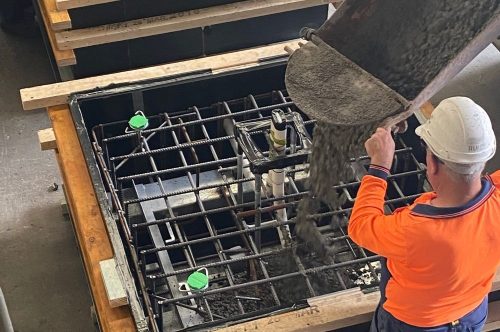
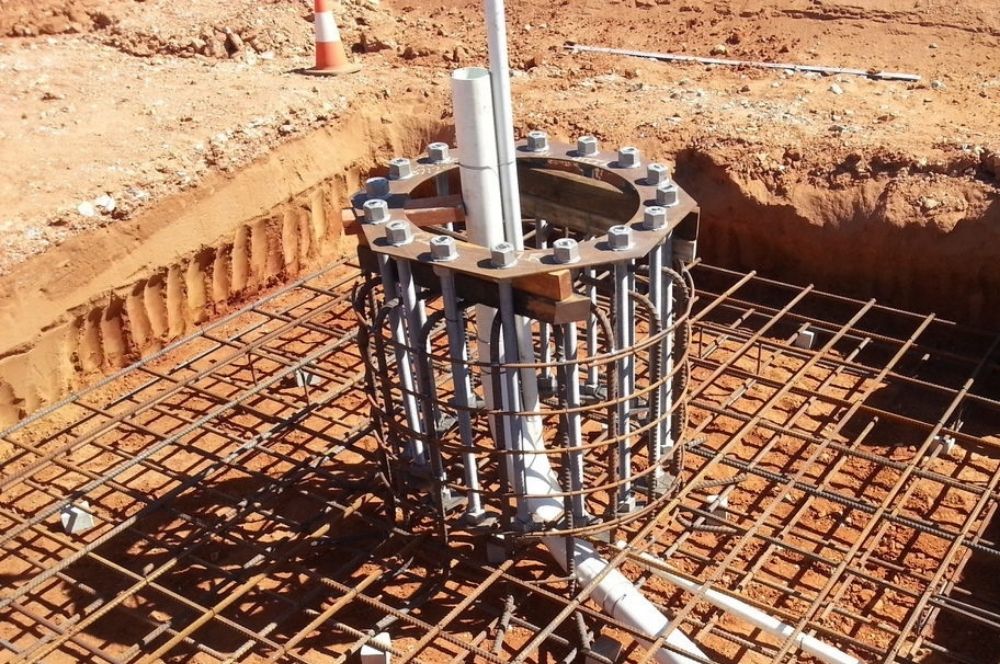
Cast-in anchor bolts are positioned before the concrete is poured and remain embedded as the concrete cures. Depending on the design, they may use hooked bolts, threaded rods, plates or prefabricated bolt cages.
Cast-in assemblies can provide high load capacity and are commonly used for pole foundations, columns and other structural baseplates. However, their capacity is not unlimited. Bolt spacing, edge distance, embedment depth, concrete strength, reinforcement, footing dimensions, corrosion exposure and loading all need to be considered by the engineer.
Wedge anchor bolts
Wedge anchors are post-installed mechanical expansion anchors. You drill a hole into hardened concrete, insert the anchor, and tighten the nut. As you do, an expansion clip at the base of the anchor drives outward and grips the hole wall with significant force.
Drop-in anchor bolts
Drop-in anchors are internally threaded sleeves set flush into pre-drilled holes using a setting tool. Once driven in, a threaded rod or bolt screws directly into them. The flush finish makes them popular for overhead fixtures and suspended fittings where a protruding bolt would be impractical.
They are commonly used for suspended services, ceiling installations and other applications where a protruding stud would be unsuitable.
Sleeve anchors
Sleeve anchors use a full-length expander sleeve that opens as the bolt is tightened. They work in a wider range of base materials, including brick, block and masonry, making them a sensible choice for medium-duty applications where the substrate varies.
They are commonly classified as medium-duty anchors, although the actual capacity and permitted substrate depend on the product, anchor size, embedment and installation conditions.
Concrete screw anchors
Concrete screw anchors form a mechanical thread in the base material as they are installed. Many products are removable and create less expansion pressure than conventional expansion anchors, which can make them suitable for closer edge or anchor spacing.
That speed is an advantage on busy sites, though load capacity is lower than cast-in or wedge anchor systems.
Chemical anchors
Chemical anchors use injectable resin, typically epoxy or vinylester, to bond a threaded rod into a pre-drilled hole. They allow closer edge distances than mechanical anchors and are well suited to close-to-edge installs where physical expansion would cause concrete to split.
For further installation guidance on footing layouts and rag bolt specifications, see our footings and rag bolts procedures page.
The Installation Process of Anchor Bolts
Getting anchor bolts right comes down to preparation as much as anything else. Follow these steps:
- Confirm the approved anchor type, diameter, embedment, spacing, edge distance and base material.
- Mark out hole positions using a supplied template or engineer’s drawing.
- Drill to the specified diameter and depth using an SDS+ hammer drill or core bit for larger diameters.
- Clean the hole using the procedure specified for that anchor and hole condition.
- Insert the anchor or inject resin and insert the threaded rod with a twisting motion to ensure full coverage.
- Tighten to the specified torque using a calibrated torque wrench, or allow full cure time for chemical anchors before loading.
- Inspect and record – Government and infrastructure projects commonly include inspection, testing and traceability requirements.
How Much Weight Can Anchor Bolts Hold?
There is no single load capacity for an M12, M16 or M24 anchor. Capacity depends on the complete anchor system and installation, including:
- The exact anchor product and material
- Effective embedment depth
- Concrete strength and age
- Cracked or uncracked concrete conditions
- Anchor spacing and edge distance
- Fixture thickness
- Tension, shear and combined loading
- Reinforcement and footing geometry
- Installation quality
Design resistance must be taken from the current assessment documentation for the exact product and checked using the applicable engineering design method. A structural engineer should verify safety-critical anchor groups, pole foundations and combined-load connections.
Corrosion Resistance Matters
For outdoor and coastal applications, corrosion resistance is non-negotiable. Hot-dip galvanising is commonly specified for external steelwork, but the required coating and expected service life depend on the steel thickness, applicable galvanising standard, environmental exposure and project specification.
Under AS/NZS 4680, an average minimum coating mass of 600 g/m², equivalent to approximately 85 micrometres, applies to fabricated steel thicker than 6 mm.
Grade 316 stainless steel is commonly considered a minimum for many coastal atmospheric applications. However, it is not suitable for every high-corrosion environment. Severe marine, splash-zone, submerged, unwashed or crevice-prone applications may require duplex, super duplex or another more highly alloyed stainless steel.
G&S Industries supplies prefabricated rag-bolt assemblies that can be delivered before the pole, allowing foundations to be installed and cured ahead of pole erection. This can help coordinate project sequencing, including work in remote mining, infrastructure and renewable-energy locations.
Getting the Right Anchor for Your Project
The right anchor bolt isn’t always the biggest or the cheapest. It’s the one that suits your base material, load case, installation method and long-term environment.
If you’re specifying a pole footing and need to confirm the right rag bolt configuration, speak to our team for guidance on layouts, bolt grades and concrete mix requirements. We’re always happy to help.
Frequently Asked Questions
An anchor should not be reused unless its manufacturer’s current instructions and product approval expressly permit removal and reinstallation.
Many conventional wedge, sleeve and bonded anchors are intended for a single installation. Once removed, their components, expansion mechanism or original drilled hole may no longer provide the assessed performance. Some specialist mechanical anchors and concrete screws are designed to be removable, but any conditions relating to inspection, reuse or replacement must be followed exactly.
Cast-in rag bolts and cured chemical anchors are generally permanent components of the foundation.
Cast-in anchor bolts are positioned before concrete is poured and become part of the foundation as it cures. Post-installed anchors are fitted into hardened concrete using mechanical expansion, concrete threads or chemical resin. The right option depends on the structure, load requirements and installation stage.