
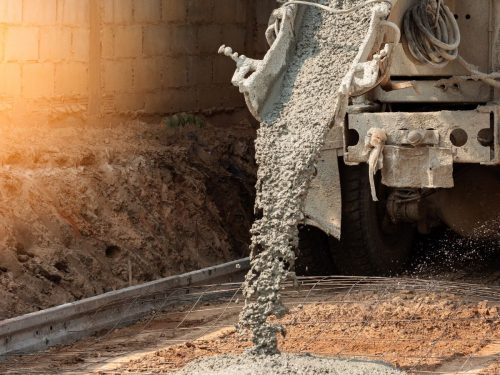
Getting the concrete mix ratio right sounds straightforward, but it’s one of those things that trips people up more often than you’d expect. Use the wrong ratio and you’re either left with concrete that’s too weak for the job, or a mix that’s so stiff it won’t pour properly. Neither outcome is good, especially on a large construction project where time and budget don’t allow for mistakes.
Whether you’re pouring an internal floor slab, setting footings for steel light poles, or working on a light commercial project, understanding the different types of concrete mix and when to use them makes a real difference to the finished result.
What is a Concrete Mix Ratio?
Concrete is made from four raw materials: cement, sand, coarse aggregate (crushed stone or gravel), and water. The concrete mix ratio describes the proportion of each of these ingredients relative to one another.
A ratio like 1 : 2 : 4 means one part cement, two parts sand, and four parts coarse aggregate. Add water, and concrete begins to form as the cement binds everything together. The water cement ratio, meaning how much water you use relative to cement, has a direct impact on compressive strength. More water makes the mix easier to work with, but it reduces the strength of the finished concrete. Less water improves strength but can cause problems during placing.
Common Concrete Mix Ratios and Their Uses
There are three nominal mixes that cover the majority of everyday construction work:
1 : 3 : 6 (Lean Mix)
This is a low-strength option, sometimes called a lean mix or floor blinding mix. It’s not structural, so you wouldn’t use it for anything that needs to withstand heavy loads. It suits void filling, unreinforced blinding layers under slabs, and similar applications where strength isn’t the priority.
1 : 2 : 4 (Normal Strength Concrete)
This is the go-to mix for general work, roughly 20 MPa when cured properly. Garden paths, light slabs, simple precast structures, and non-structural pours all suit a 1 : 2 : 4 ratio. It’s a reliable normal strength concrete option and one of the most widely used mixes on residential and smaller commercial sites.
1 : 1.5 : 3 (Higher Strength Mix)
For driveways, industrial floors, car parks, and footings that need to carry real load, you need more strength. A 1 : 1.5 : 3 mix offers compressive strength in the 25-32 MPa range, making it suitable for light commercial projects and structural applications. Mid-hinged pole footings typically require concrete in this strength range to handle the bending loads transferred down from the pole.

How to Calculate Concrete Mix Ratio Quantities
Knowing how to calculate concrete mix ratio quantities by volume is a useful skill, particularly if you’re ordering from a batching plant or working with a volumetric concrete truck on site.
Start with the volume of the pour. A simple slab that is 4 metres long, 3 metres wide, and 100 millimetres (mm) thick gives you:
4 m x 3 m x 0.1 m = 1.2 cubic metres (m³)
For a 1 : 2 : 4 mix across 1.2 m³, you’d need approximately 320 kilograms (kg) of cement, 640 kg of sand, and 1,280 kg of coarse aggregate. These figures are approximate and don’t account for waste, but they give you a solid starting point when placing your order.
If you’re working on a remote site without a batching plant nearby, volumetric concrete mixers are a practical option. They batch on demand, which helps limit water waste and gives you more control over the exact mix design for each pour.
Different Types of Concrete Mix for Specific Jobs
Beyond the standard nominal mixes, there are a number of concrete types designed for more specific applications:
Reinforced concrete uses steel rods embedded in the mix to improve tensile strength. Concrete is strong in compression but relatively weak in tension, so the steel and concrete work together.
Fibre concrete incorporates synthetic or steel fibres into the mix instead of, or alongside, traditional reinforcement. It’s increasingly common in industrial floors and construction sites where managing cracks under heavy loads is a priority.
Pervious concrete (permeable concrete) has a deliberately high void content, which allows water to pass through the surface. It’s used in car parks and other paved areas to manage stormwater during heavy rain.
Rapid-set concrete is designed to reach working strength quickly. It’s popular for repairs, pole installations, and other work where you can’t afford a long curing window.
Roll compacted concrete is a dry, stiff mix that’s compacted with a roller rather than poured. It’s suited to hardstands and heavy-duty industrial applications.
Decorative concrete, including stamped concrete, uses integral colour pigments, white cement or grey cement, and surface texturing to achieve aesthetic appeal on driveways, paths, and architectural features.
Lightweight concrete uses lightweight aggregates instead of crushed stone, reducing the overall weight of the pour. This is useful in precast structures and applications with high thermal qualities as a priority.
For sustainable projects, supplementary cementitious materials (SCMs) such as fly ash and silica fume are increasingly mixed in with the cement. These materials partially replace grey cement in the mix design, which can reduce embodied carbon while maintaining adequate concrete strengths. Fly ash blends are now broadly accepted across infrastructure projects Australia-wide.
Mixing and Placing Concrete in Australian Conditions
Australia’s climate throws up some genuine challenges at the construction stage. A few practical points worth keeping in mind:
Hot weather: Fresh concrete loses water quickly in the heat, which can cause cracking and reduce strength. Start curing early, keep raw materials shaded, and plan pours for cooler parts of the day where possible.
Cold weather: Avoid placing concrete in cold weather below about 5°C. The chemical reaction that gives concrete its strength slows significantly in cold conditions.
Water management: Add water gradually during the mixing process, in small increments, until you reach a workable consistency. Overwatering is one of the most common mistakes on site, and it directly reduces compressive strength.
Perth concreters often work with sandy local soils that affect how footings behave, and coastal sites across Western Australia bring chloride exposure into the mix design conversation. Getting the water-cement ratio right from the start is especially important in these environments.
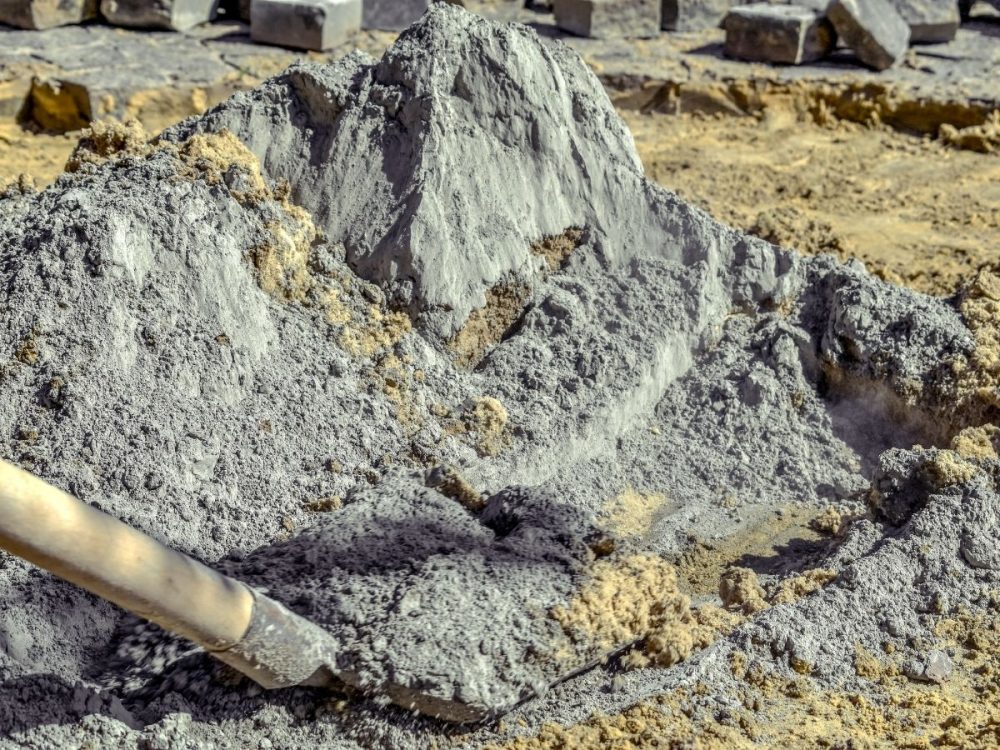
The Right Mix Makes the Difference
Choosing the correct mix ratio isn’t just about following a formula. It’s about matching the concrete’s strength and properties to what the job actually demands. A lean mix for floor blinding and a high-strength structural mix for a footing are very different products, even though both start with the same four raw materials.
If your project involves steel pole installations and you need to understand the footing requirements, the G&S Industries team is happy to talk through the structural side. From mid-hinged pole footings to custom pole solutions across Australia, we can help you get the foundation right from the start. Contact our team to discuss your project.
Frequently Asked Questions
Most structural footings call for a higher-strength mix in the 25-32 MPa range, which corresponds roughly to a 1 : 1.5 : 3 nominal mix. The exact requirements will depend on the load being carried, soil conditions, and the specific project specifications. Pole footings, for example, need to handle both vertical load and bending moment, so strength and correct placement are both important.
Multiply the length by the width by the depth of the slab to get the volume in cubic metres. From there, you can work out the approximate quantities of cement, sand, and aggregate based on your chosen mix ratio. Always add a small allowance for waste and uneven ground.
Yes, and it's one of the most common mistakes on site. Excess water weakens the mix by increasing the water-cement ratio beyond what's needed for hydration. Fresh concrete may look more workable, but once it sets, the compressive strength is noticeably lower. Add water in small increments during the mixing process until you reach the right consistency.
Ready mix concrete is batched at a central plant and delivered by truck, which gives you a consistent and quality-controlled mix design. On-site mixing, particularly with volumetric concrete trucks, offers more flexibility to adjust the mix ratio to suit specific project requirements as you go. For remote sites or projects where the mix needs to change between pours, volumetric batching can be a practical choice.