
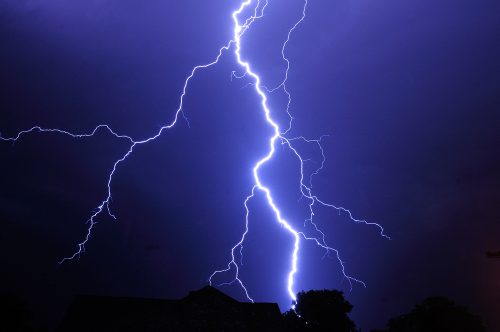
When you’re specifying electrical infrastructure for mining sites, councils or utilities, understanding the difference between surge vs lightning arrestor technology isn’t just technical housekeeping. It’s about protecting expensive equipment, keeping projects compliant and reducing downtime after storms.
Both devices manage electrical threats, but they tackle completely different problems.
Quick Definitions: Lightning Arrestor vs Surge Arrestor
Lightning Arrestor
A lightning arrestor (sometimes called a lightning arrester) sits at the highest point of a structure. Its job is to intercept a direct lightning strike and carry that massive current safely to earth through a dedicated down-conductor and grounding system. Think of it as the first line of defence on the outside of your pole, tower or building.
Surge Arrestor
A surge arrestor or surge protection device (SPD) lives inside your switchboard or at the service entry. It clamps transient voltage surges caused by distant lightning, switching events or faults on the power network. Rather than handling the full energy of a direct strike, it protects sensitive equipment from voltage spikes travelling along cables.
In short, lightning protection handles the big hit from above; surge protection handles the electrical noise that ripples through your wiring.
Key Differences at a Glance
| Factor | Lightning Arrestor | Surge Arrestor (SPD) |
| Threat addressed | Direct lightning strike | Induced voltage surges, switching transients |
| Mounting position | External, highest point (air terminal) | Internal, switchboard or service entry |
| Primary components | Steel rod/finial, down-conductor, earth system | MOV, GDT, spark gap |
| Current flow | Carries full stroke to earth | Clamps transient then ceases conduction |
Both devices are essential, but they’re not interchangeable. A surge protector cannot safely carry the energy of a direct strike, and a lightning arrestor won’t stop voltage spikes travelling along power cables.
Need Lightning Protection in WA? Talk to G&S Industries
From Darwin to Perth, Australian infrastructure faces some of the planet’s most intense lightning activity. Whether you’re upgrading council sports fields, installing mine-site area lighting or specifying telecommunications towers in cyclonic zones, getting your lightning and surge protection right protects your investment and keeps your project compliant.
G&S Industries has been engineering galvanised steel poles and accessories for more than 55 years. Our lightning arrestors are built to handle the harsh conditions of coastal and cyclonic regions.
Ready to order lightning protection for your next project? Get in touch with our team for a quote or technical advice tailored to your site conditions.
Frequently Asked Questions
No. Lightning arresters divert a direct strike to earth, while surge arresters clamp over-voltages induced on electrical wiring. Both are needed for complete protection.
Surge protection handles transient voltages inside your electrical circuits. Lightning protection handles the full strike energy outside the structure via an air terminal, down-conductor and earth system.
Both spellings are accepted in the industry. Standards Australia uses "arrester" in AS/NZS 1768, but "arrestor" appears in many manufacturer catalogues and remains widely understood.
A Type 1 SPD can mitigate indirect lightning surges travelling along power lines, but it cannot safely carry the energy of a direct strike. You still need an external lightning arrester and proper bonding to handle direct lightning.